

How to Clean Epoxy Garage Floors Without Damaging the Finish?

Your garage floor probably works harder than any other surface in your house. It deals with parked cars, dropped tools, workout equipment, weekend project spills — the works. That's exactly why so many homeowners coat their concrete in the first place: it protects the floor and makes the whole space look sharper.
But putting in an epoxy coating is only half the equation. Keeping it looking good is the other half. The good news is that maintaining it doesn't take harsh chemicals or some elaborate routine — a few simple habits will keep your floor glossy and protected for years.
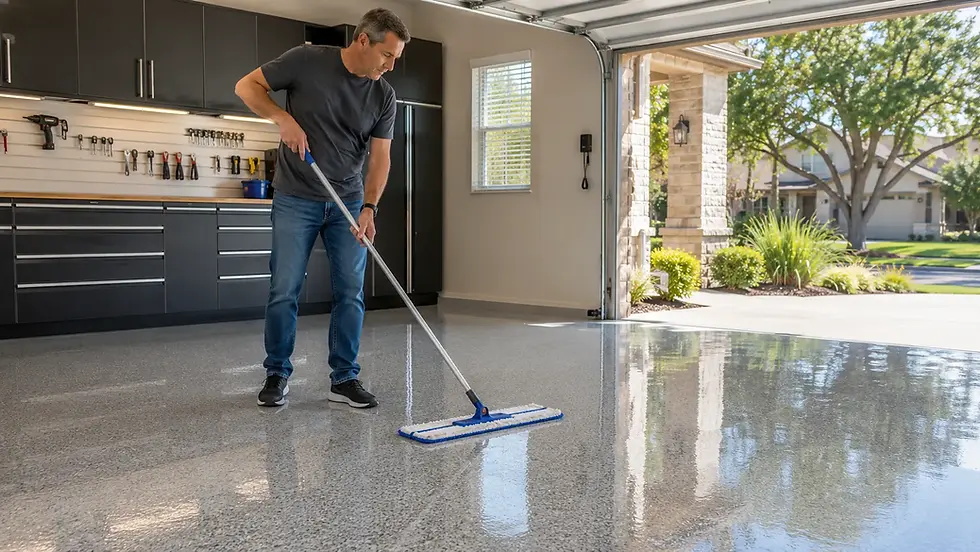
Why bother cleaning it properly?
Epoxy coatings are naturally resistant to stains, moisture, and general wear. But even a tough surface like this can start looking tired if dirt, grit, or chemicals just sit there long enough.
Staying on top of cleaning helps you:
Keep that glossy look intact
Avoid scratches from dirt and debris grinding into the surface
Get rid of oil and chemical residue before it sets in
Stretch out the life of the coating
Keep the garage looking like a space you actually want to spend time in
It really doesn't take much effort to protect what you paid for.
Step 1: Sweep First, Always
Before you touch a mop or spray bottle, clear off the loose dirt with a soft-bristle broom, a microfiber dust mop, or even a leaf blower.
This step matters more than people think. Sand and small gravel act almost like sandpaper once a tire or a shoe grinds them into the floor. Sweeping once or twice a week is enough to keep that kind of wear from creeping up on you.
Step 2: Warm Water and a Mild Cleaner Is All You Need
For everyday cleaning, warm water with a small amount of pH-neutral cleaner does the job. That's it — no need for anything stronger.
Steer clear of:
Bleach
Ammonia
Citrus-based cleaners
Vinegar
Anything highly acidic
Wax-based soaps
These can leave a residue behind or slowly wear down the shine over time. A microfiber mop or a soft sponge is really all you need to clean the surface without stressing it.
Step 3: Deal With Spills Right Away
Epoxy holds up well against most stains, but that doesn't mean you should let a spill sit there. The sooner you wipe it up, the better.
Typical garage spills worth watching for:
Motor oil
Brake fluid
Gasoline
Paint
Fertilizer
Household chemicals
Blot it up with a soft cloth or paper towel first, then follow up with warm water and a mild detergent. Acting quickly protects both the look and the long-term durability of the coating.
Step 4: Tackle Tough Stains the Right Way
Tire marks, old grease, or stubborn dirt sometimes need a little more elbow grease — but resist the urge to grab an abrasive scrub brush.
Instead, reach for:
A soft nylon brush
A non-abrasive kitchen sponge
Warm water with a gentle degreaser made for epoxy floors
Work it in small circles until the stain lifts. Steel wool, wire brushes, and rough scouring pads are off the table entirely — they'll scratch right through the finish.
Step 5: Watch What You Drag Across the Floor
Epoxy is tough, but dragging a heavy toolbox, furniture, or gym equipment across it can still leave marks. If your garage doubles as a home gym, it's worth putting rubber mats under the equipment. It's a small step, but it protects both the floor and the gear sitting on it — something a lot of homeowners realize once they start pricing out a home gym floor coating in DFW and want to protect that investment too.
Epoxy vs. Polyurethane vs. Polyaspartic
Epoxy is still the most common choice, but it's not the only one out there anymore.
Polyurethane holds up especially well against scratches, chemicals, and UV exposure, and it flexes a bit more than epoxy — which makes it a solid pick for garages that go through big temperature swings or see a lot of vehicle traffic.
Polyaspartic coatings cure fast, resist yellowing, and hold up well under sunlight. That quick cure time also means you're back to using your garage sooner after installation.
A lot of professional installations actually combine epoxy with a polyurethane or polyaspartic topcoat, getting the strength of one with the finish and durability of the other.
A Few Habits Worth Keeping Long-Term
Sweep regularly — don't let dirt and grit build up
Mop with a pH-neutral cleaner about once a month
Wipe up spills as soon as they happen
Put mats under motorcycles, workbenches, and gym equipment
Skip the abrasive tools
Use furniture pads when you're rearranging heavy items
Rinse off road salt or de-icer during winter
None of this takes much time, but it adds up to a floor that keeps its shine for years instead of months.
Do You Ever Need a Professional?
Most of the time, no — homeowners can keep their coated floors looking great without ever calling in a pro. But if the gloss starts fading after years of regular use, it might be worth having someone take a look to see if a fresh topcoat could bring it back to life.
Staying consistent with basic care now is a lot cheaper than dealing with a full recoat later.
Conclusion
Learning how to clean your garage floor correctly is one of the easiest ways to protect your investment. Whether you have epoxy garage floor coatings, a polyurethane floor coating, or a polyaspartic floor coating, gentle cleaning methods and routine maintenance will keep your floor looking beautiful for years. Beyond their durability, one of the greatest benefits of epoxy garage floor coatings is how easy they are to maintain, making them a smart choice for garages, workshops, and even home fitness spaces. If you're researching home gym floor coating cost in DFW or planning to upgrade your garage with premium garage floor coatings, American Concrete Coatings delivers expert installation, high-performance flooring systems, and lasting results designed to stand up to everyday life.


Comments